Steev Peyroux
Biography
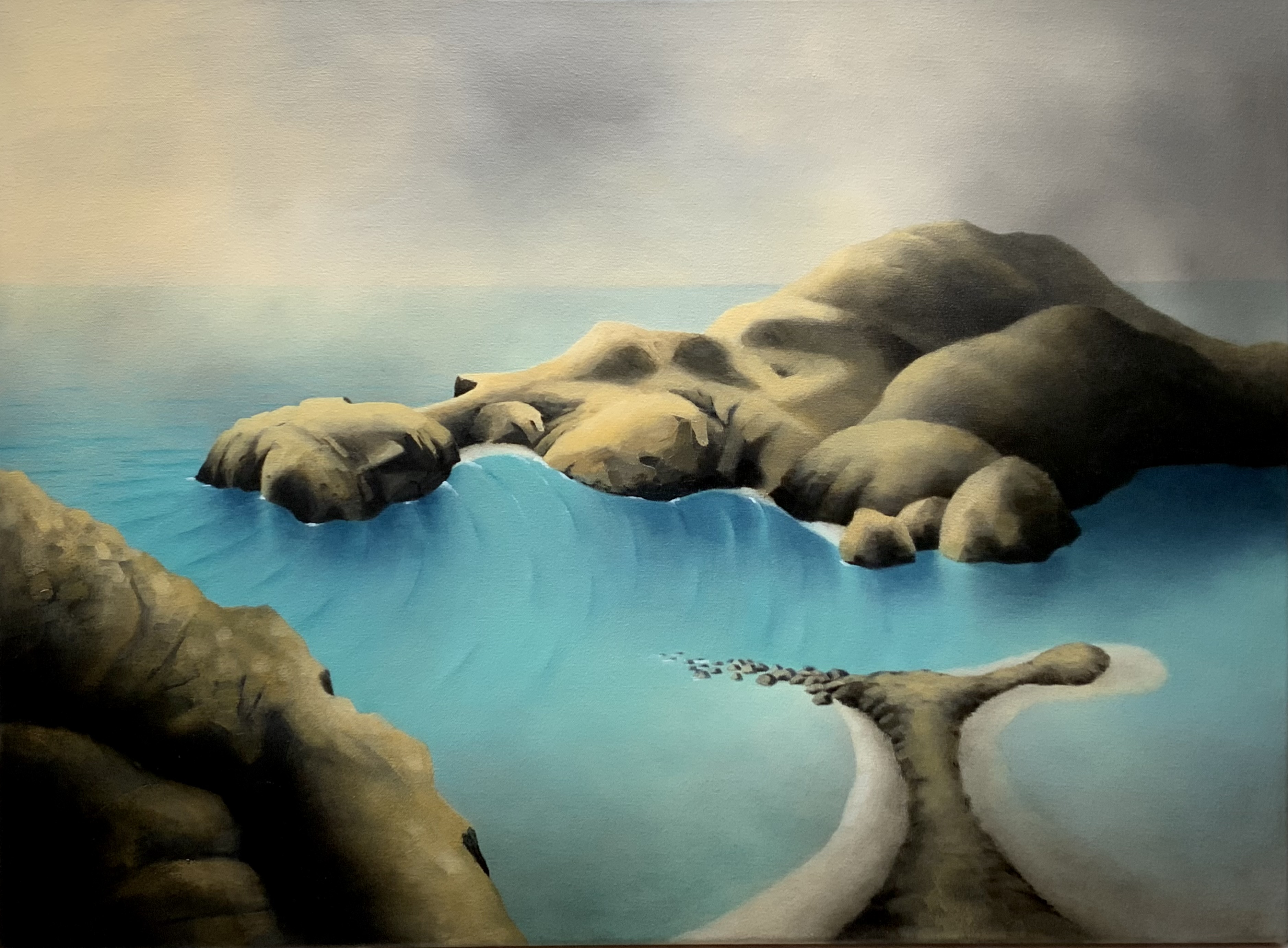
In the right hands, the shapes of the landscape, its hills and valleys, can be transformed into the lithe, reclining forms of the human body. The land’s life force becomes apparent, and we feel the connection between the human spirit and the earth on which we live. This is the art of the poet, the dancer, the printmaker, the painter.
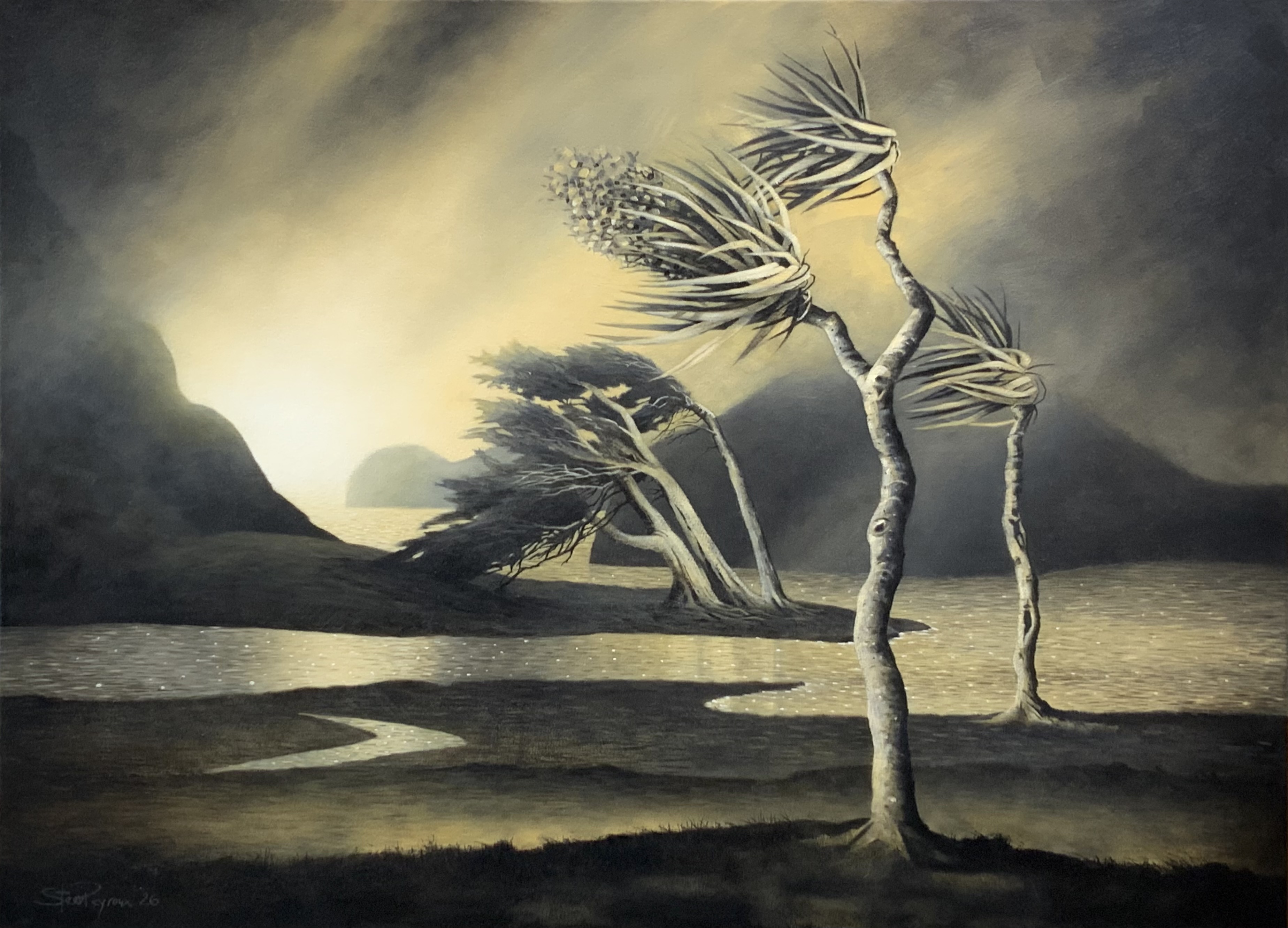
Steev Peyroux’s art fulfils this promise, with itsgentle, sensual slopes and rugged, breathing cliffs. That the land Peyrouxcreates seems to reflect the moving human form is no surprise — the motion andflow is a reflection of the artist’s earlier career as a dancer, in which guisehe toured professionally. The relatively uncommon combination of artisticprofessions gives Peyroux’s work a distinctive quality. His stripped-backlandforms seem intuitively linked to the supple fluidity of the human form, andthe sense of dynamism and physicality clearly link the two disciplines.
The son of artist Ann Wilson, Peyroux has been involvedin art from an early age and completed a diploma of fine arts at the Dunedin Schoolof Art before moving to the Victorian College of the Arts, Melbourne, where hestudied dance. After ten years of professional touring in this latter creativemedium, Peyroux returned to Dunedin and took up a position as Technical Teacherat the Dunedin School of Art.
Despite concentrating on landscape, Peyroux regularlyadheres to the technical discipline of life drawing. As a result, hislandscapes subconsciously approach the lines and structure of human form. Thereis a sense of strong movement and an intuitive arrangement of the forms whichalso comes from Peyroux’s terpsichorean background, most noticeable in his bending,supple macrocarpa, which become dancers in a natural theatre. Emotions areevoked by the manipulation of the rich sculptural rhythm and forms of theland. Ultimately, for Peyroux, the aim is to evoke the emotional power that theenvironment has on people.
The artist’s love for this work and deep understanding ofthe techniques involved has produced a distinct New Zealand romanticism. Shadesof the same feel for the land, its geography and its history can be found inseveral of Peyroux’s contemporaries in southern New Zealand, and it is perhapsnot too presumptuous to suggest Peyroux as a leading exponent of a looseSouthern Romantic movement containing such kindred artists as Inge Doesburg,Olav Nielsen, Simon Edwards, and Garry Currin.